An all-glass office
The Tejas has a glass cockpit: the old round-dial electro-mechanical instruments are replaced by colour multi-function displays (MFDs) and a head-up display (HUD). Sensor data is processed by the mission computer and shown to the pilot on these screens.3 A standby instrumentation system completes the panel.2 The Mk1A moves to smart multi-function displays and an advanced mission computer.8
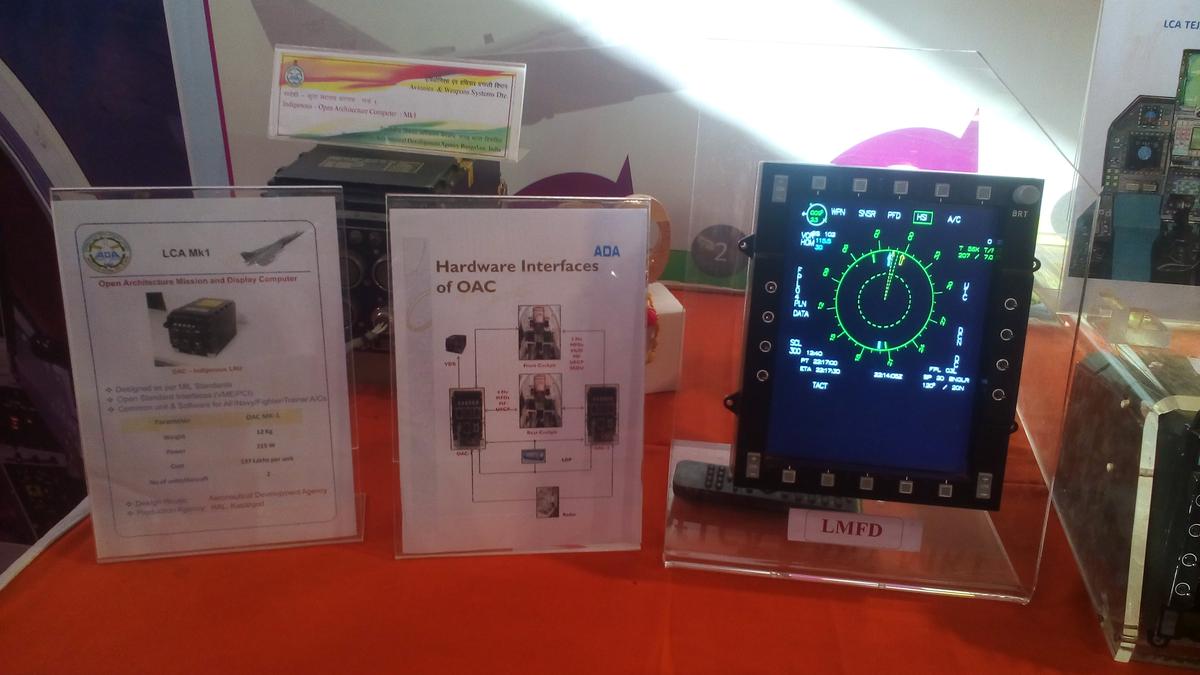
The mission computer drives three MFDs, the HUD and a helmet-mounted display.5 The HUD itself is Indian: it was developed by CSIR-CSIO in Chandigarh, is part of the Tejas Mk1's final operational clearance, and more than 110 units have been built by BEL under licence.7
Unstable by design
The Tejas is intentionally made longitudinally unstable to make it more agile — the idea known as relaxed static stability.4 A computer, not the airframe, keeps it steady.
That computer is a quadruplex digital fly-by-wire system: a digital flight control computer with four channels, each with its own power supply, housed in a single unit. It reads the pilot's stick and the aircraft's sensors and drives the elevons, rudder and leading-edge slats. Its control laws limit key parameters automatically, so the pilot can fly "carefree", and the autopilot adds auto-level and automatic low-altitude recovery.4
For the Mk1A, ADE Bengaluru developed a new digital flight control computer with a quadruplex PowerPC processor and software built to the DO-178C Level A safety standard. It first flew on prototype LSP-7 on 19 February 2024.8
Open architecture
ADA designed the Open Architecture Computer (OAC) to combine several older boxes — mission computer, display processor, video switching unit and mission preparation and retrieval unit — into one. It is built on open-system interface standards, so new sensors and weapons can be added as the aircraft is upgraded.5 The same computer also runs the utility and health-management system that reports aircraft health and warnings to the pilot.2
Sensors, by variant
The Mk1 uses a coherent pulse-Doppler multi-mode radar, jointly developed by India and Israel, with air-to-air tracking, high-resolution ground mapping and air-to-sea modes.6 It is widely identified as the EL/M-2032.12
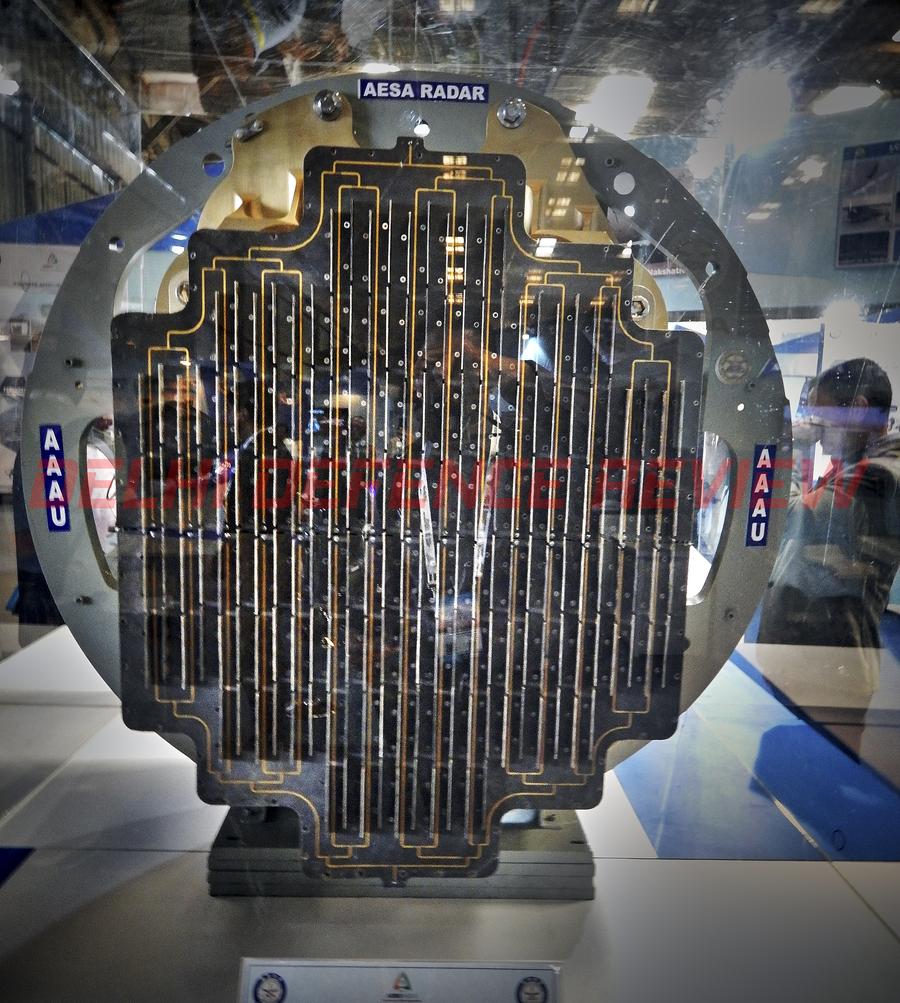
The Mk1A brings four headline upgrades: an AESA radar, an electronic warfare (EW) suite, beyond-visual-range missiles and air-to-air refuelling.9 The EW fit adds an advanced self-protection jammer,8 carried in a pod; HAL officials say that, together with the AESA radar, it further enhances the aircraft's survivability.10
The first 83 Mk1A are reported to be fitted with Israel's EL/M-2052 AESA radar. The next 97 move to India's own UTTAM AESA, developed by DRDO's LRDE with 912 transmit/receive modules; HAL ordered its antenna arrays from Astra Microwave in July 2026.12 That 97-jet contract, signed on 25 September 2025, also brings DRDO's Swayam Raksha Kavach EW suite and raises indigenous content above 64%.11 Swayam Raksha Kavach pairs a wide-spectrum radar warning receiver built into the airframe with an advanced self-protection jammer using DRFM technology.13
The Mk2, in development, is designed around an AESA radar, an infrared search-and-track sensor and a missile approach warning system,14 with an integral Unified Electronic Warfare Suite and a new digital flight control computer.15
Mk2 entries are design features; its first flight is targeted for 2027. A dash means no reliable published detail.
| System | Mk1 | Mk1A | Mk2Design |
|---|---|---|---|
| Radar | EL/M-2032Multi-mode pulse-Doppler12 | EL/M-2052 AESAFirst 83 jets; UTTAM AESA on the next 9712 | AESA radarPlanned14 |
| EW / self-protection | EW suite1 | EW suite + self-protection jammer podSwayam Raksha Kavach on the 97-jet batch811 | Unified EW SuitePlanned15 |
| Other sensors | — | — | IRST, missile approach warningPlanned14 |
| Flight control | Quadruplex digital FBW4 | New ADE digital flight control computer8 | New digital flight control computer15 |
| Cockpit | MFDs, CSIO HUD, helmet display57 | Smart MFDs, advanced mission computer8 | — |
Sources
- ADA — LCA Air Force Mk1 (archived copy of ada.gov.in). ada.gov.in via web.archive.org
- ADA — Tejas systems (archived copy of tejas.gov.in). tejas.gov.in via web.archive.org
- ADA — Glass cockpit (archived copy of tejas.gov.in). tejas.gov.in via web.archive.org
- ADA — Fly by wire (archived copy of tejas.gov.in). tejas.gov.in via web.archive.org
- ADA — Open Architecture Computer for avionics (archived copy of tejas.gov.in). tejas.gov.in via web.archive.org
- ADA — Multi-mode radar (archived copy of tejas.gov.in). tejas.gov.in via web.archive.org
- CSIR — Drishti for the fighter aircraft: head-up display (CSIR-CSIO). csir.res.in
- PIB — Digital Flight Control Computer for Tejas Mk1A flown successfully, 20 Feb 2024. pib.gov.in
- PIB — Cabinet approves procurement of 83 LCA Tejas from HAL, 13 Jan 2021. pib.gov.in
- ThePrint — 83 Tejas Mk1A: all you want to know about the aircraft, 13 Jan 2021. theprint.in
- PIB — MoD signs contract with HAL for 97 LCA Mk1A, 25 Sep 2025. pib.gov.in
- Times of India — Rs 2,205 crore order for UTTAM radars for Tejas, 31 Jul 2026. timesofindia.indiatimes.com
- The Week — DRDO testing Swayam Raksha Kavach EW suite on Tejas Mk1A, 4 Nov 2025. theweek.in
- Jane's — Aero India 2019: ADA unveils Tejas AF Mk 2 Medium Weight Fighter (archived). janes.com via web.archive.org
- The Week — Capabilities of the Tejas Mk2, as explained to a parliamentary panel, 20 Dec 2024. theweek.in
Header photo: Tejas cockpit simulator at an exhibition, by Udayblr, via Wikimedia Commons, CC BY-SA 4.0. UTTAM photo: Wikimedia Commons. OAC exhibit: Wikimedia Commons.


